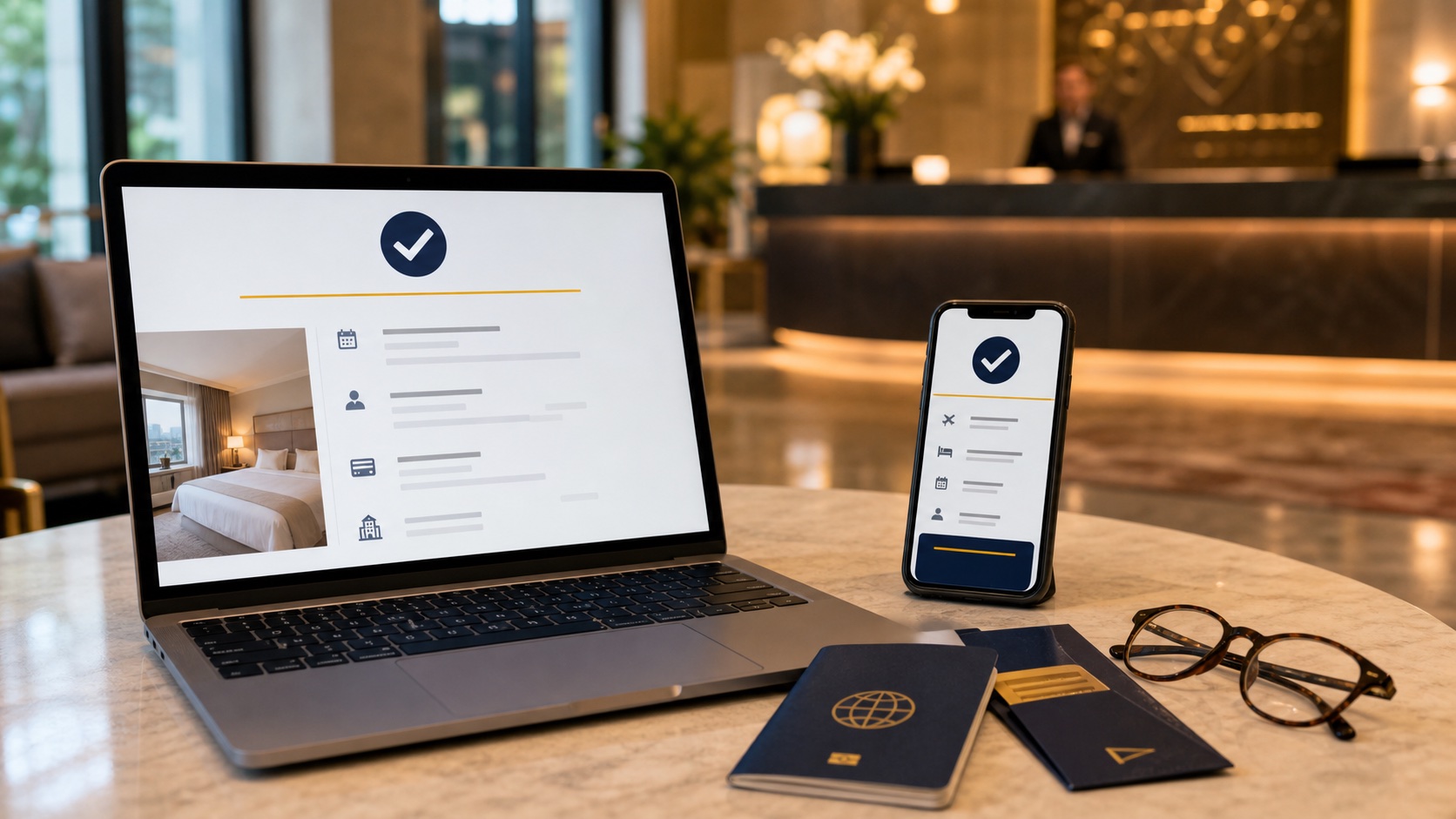
Editorial note: We reviewed Expedia's current U.S. terms, company history, payment language, confirmation rules, and hotel price-guarantee conditions. NerdWallet's article informed the initial question set, but this guide uses a different booking-verification structure and independently checked sources.
Expedia is real. Your job is to verify the reservation behind it.
Expedia has operated since 1996 and belongs to publicly traded Expedia Group. It can legitimately search, facilitate, and process travel bookings. The practical risk comes from the extra layer between you and the airline, hotel, car company, or activity provider when details change.
Why we consider Expedia legitimate
Expedia Group's company history says Expedia.com launched inside Microsoft in 1996 and later became an independent public company. Its investor-relations site identifies Expedia Group as a publicly traded business, and Expedia's current terms name the legal entities involved in bookings and payments. Those are strong, verifiable signs of a real operating company rather than an anonymous booking page.
That does not mean every listing is the best value, every change will be simple, or every supplier policy will favor the traveler. Legitimacy answers “Is this a real travel agency?” It does not answer “Is this particular rate the right one for me?”
How an Expedia booking actually works
Expedia provides the search and booking service, while an airline, property, rental company, cruise line, or activity operator usually provides the travel itself. Expedia's terms call these businesses “Travel Providers” and state that their rules and restrictions also apply to the reservation.
This chain explains both Expedia's convenience and its weakness. One interface can compare many providers, but a change may still be governed by a provider's policy and require communication across more than one company.
What happens to your payment?
For a “Pay Now” stay, an Expedia Group company typically charges the booking amount when you reserve. For “Pay Later,” the property typically charges you in local currency at the stay or at the time shown during booking. A package may create more than one charge on your statement, although Expedia's terms say the combined charges should not exceed the displayed total for the travel services.
Also look for property deposits, local taxes, currency-conversion costs, and card-issuer foreign transaction fees. A legitimate checkout can still cost more than expected if these separate items are overlooked.
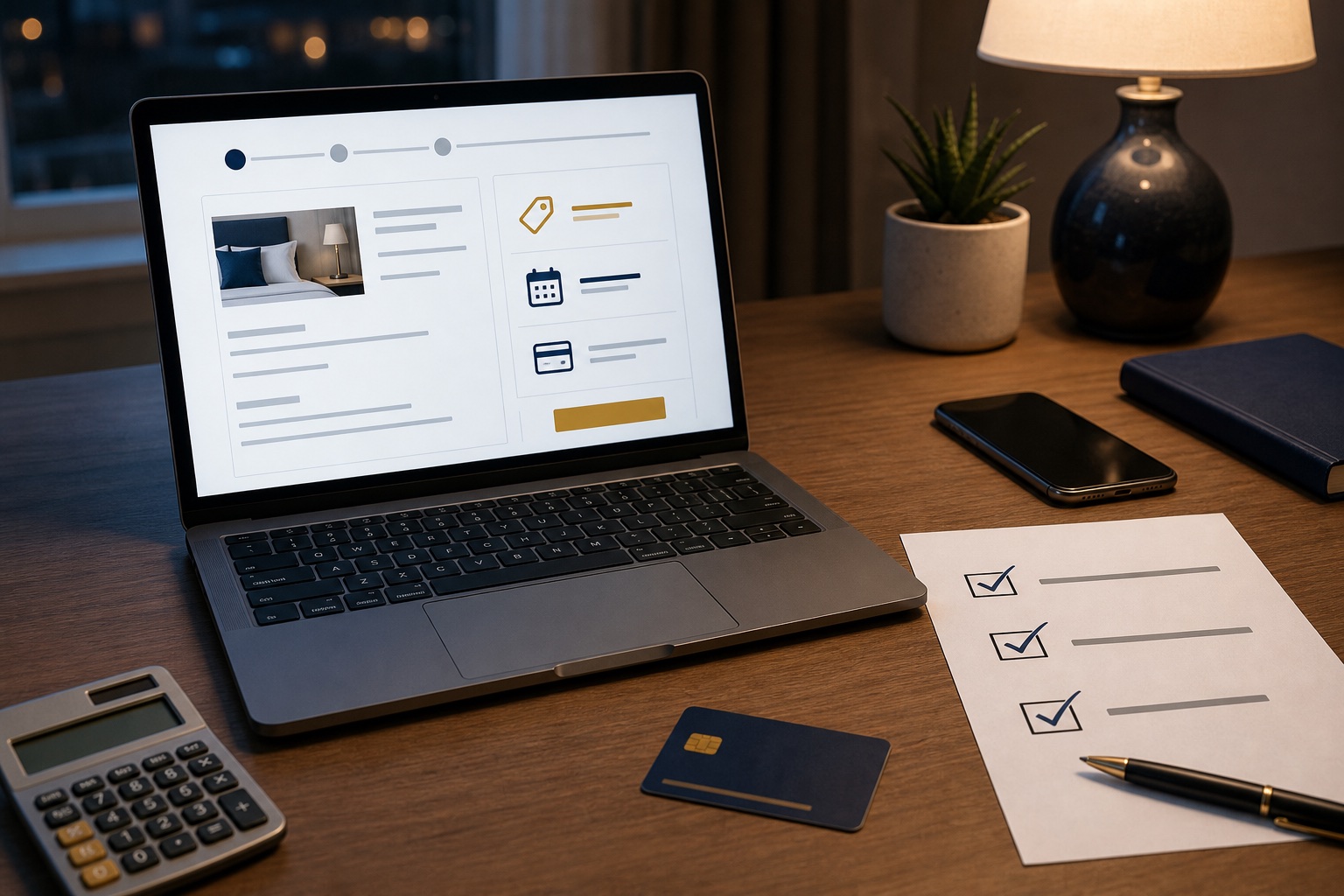
The confirmation is where trust becomes evidence
Expedia's terms say the booking confirmation contains essential elements such as the service description and price. If it does not arrive within 24 hours, Expedia directs travelers to its Help Center. Receiving that email is important, but for a hotel stay we would go one step further and ask the property to confirm that the reservation appears in its own system.
The important distinction was not whether a screen displayed “confirmed.” It was whether the traveler had a saved Expedia confirmation, understood who supplied the stay, and could verify that the property recognized the reservation. Those three records make a problem much easier to explain.
What can go wrong with a legitimate Expedia booking?
Normal, legitimate situations
- Different names on the statement. Expedia's terms identify different group companies and travel providers that may process payments.
- A Pay Later hotel charges locally. The property may charge in its own currency at check-in or at another disclosed time.
- A package creates multiple charges. Different components may be collected by different parties.
- The hotel asks for a deposit. A check-in deposit can be separate from the amount paid through Expedia.
Problems that need action
- No confirmation after 24 hours. Contact Expedia before assuming the reservation exists.
- The provider cannot find the booking. Recheck the name, itinerary number, and confirmation with Expedia promptly.
- The charge exceeds the agreed total. Compare the statement with the saved checkout and confirmation.
- A message asks you to pay outside the documented process. Stop and contact Expedia or the provider through contact details you find independently.
Why cancellations can still be difficult
Expedia's terms state that travelers do not have an automatic right to cancel or change a booking unless the relevant provider allows it. The provider may charge a fee, and Expedia may also charge an administration fee if disclosed. Even in one itinerary, separate components can have different rules.
A room marked fully refundable may be refundable only until a precise local deadline. After that point, the same legitimate reservation can become nonrefundable. Save the time zone and deadline, not just the green label.
Can Expedia still be a good deal?
Yes, especially when broad comparison, member pricing, or a package lowers the full trip cost. Expedia also publishes a Hotel Price Guarantee for qualifying bookings when a traveler finds an identical lower rate and provides the required proof. “Identical” includes the same property, room, dates, rate plan, extras, and change or refund policy; member-only rates and packages are among the exclusions.
Always compare Expedia's final total with the provider's own price. Direct booking can include breakfast, easier changes, hotel points, elite-night credit, or other benefits that are worth more than a small headline discount.
How to book on Expedia safely
- 01Use the correct website or app
Type Expedia's address yourself or use the official app instead of trusting an unexpected message link.
- 02Match the exact rate
Check room type, occupants, dates, inclusions, payment timing, and refund deadline.
- 03Record the final total
Save a screenshot that includes taxes, fees, currency, and any amount due at the property.
- 04Use a card with dispute protections
A credit card generally provides a clearer paper trail than an irreversible payment method.
- 05Save Expedia's confirmation
Keep the itinerary number, supplier details, rules, and receipt together.
- 06Confirm directly with the provider
For an important hotel stay, make sure the property can see the reservation before arrival.
Search broadly, read the exact rate, and confirm the booking after payment.
Final verdict
Expedia is legitimate and can be a practical place to compare and book travel. Its long operating history, public-company status, documented terms, and established payment and confirmation processes support that conclusion.
The sensible caution is about the booking structure, not whether the company exists. Expedia is an intermediary, supplier rules still matter, and changes can involve more coordination than booking direct. Verify the total, save the terms, wait for the confirmation, and check important reservations with the provider. If those steps feel disproportionate to a small saving, book direct.
Sources and review date
Reviewed September 2, 2026. Booking terms change; rely on the conditions shown for your transaction.