
Editorial note: We independently reviewed Expedia's current U.S. search pages, One Key terms, package claims, and booking terms. The reference article from NerdWallet helped frame the questions, but every conclusion and example below was rewritten and checked against current primary sources.
A powerful comparison tool, but not an automatic checkout
Start on Expedia when you need to compare many airlines, hotels, cars, and activities quickly. Before paying, open the airline or hotel's own site and compare the same fare or room — including bags, breakfast, resort fees, flexibility, and loyalty benefits.
How we reviewed Expedia
We used a practical booking-desk method: review Expedia's public search and package flows, note what is included, and check how the same itinerary should be compared on the supplier's site before payment. We also checked Expedia's current terms for cancellations, packages, search ordering, and One Key. We did not complete a paid booking or contact support, so we do not present an invented stay, refund, or service call as personal experience.
What stood out during our review was how quickly Expedia moves from a wide search to a workable shortlist. The moment that required the most care came later: two results that looked comparable could carry different payment timing, refund deadlines, or supplier rules. That is why our process ends with the checkout details, not the search-results price.
The advantages: where Expedia earns its place
The strongest benefits
- One useful search layer. Compare flights, stays, cars, packages, and activities without starting from five separate sites.
- Filters reduce the noise. Price, neighborhood, guest rating, amenities, and refundability can turn hundreds of listings into a manageable shortlist.
- Packages can genuinely save money. Expedia says eligible bundled bookings may cost less than the same components booked separately; the saving varies by trip and is not available on every package.
- Flexible hotels are easier to find. The “fully refundable” label and filter help surface eligible stays, though every deadline still needs to be checked.
- One Key suits flexible brand shoppers. A traveler who chooses by price and location rather than one hotel chain can collect eligible rewards across Expedia, Hotels.com, and Vrbo.
The trade-offs to accept
- Expedia is not always cheapest. Direct rates may include breakfast, flexible changes, lower fees, or member benefits that do not appear in the headline price.
- A third party sits in the middle. When plans change, the supplier's rules still control much of the outcome and Expedia may need to coordinate the request.
- Policies vary within one cart. A package can contain components with different refund and change rules.
- Brand loyalty can lose value. Direct bookings are often safer when elite-night credit, upgrades, or hotel points matter.
- Extras need separate scrutiny. Insurance, bags, seats, parking, deposits, and resort fees can change the true trip cost.
1. Price and packages: compare the whole basket
Expedia's biggest practical advantage is the ability to assemble a flight, hotel, and car in one workflow. Its official package pages state that eligible packages may offer savings versus buying the same components separately. That wording matters: discounts vary by dates, destination, trip length, and supplier, and some packages do not qualify.
Our preferred method is a three-column comparison: Expedia package total, Expedia items purchased separately, and the same items booked direct. Add baggage, seat selection, breakfast, parking, resort fees, and any card or loyalty benefits before choosing the lowest real total.
A package badge is a reason to calculate, not proof that every component is cheaper.
2. Cancellation and changes: the most important weakness
Expedia's current terms say there is no automatic right to cancel or change a booking unless the relevant travel provider allows it. The provider may charge a fee, and Expedia may also charge an administration fee when disclosed. A package does not create one universal policy; each flight, stay, car, or activity can keep its own rules.
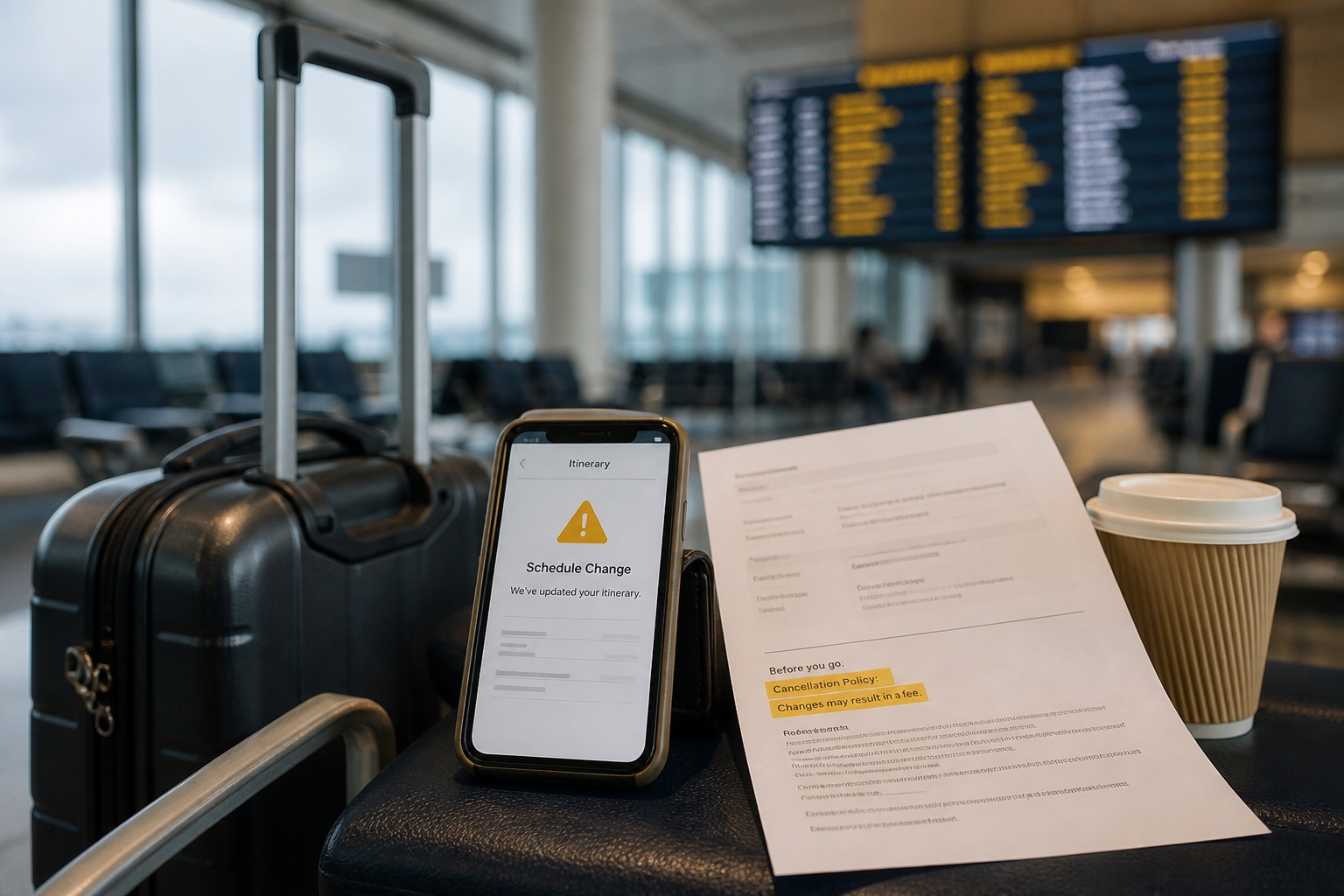
Imagine a four-night city break with a nonrefundable flight and a hotel refundable until 48 hours before arrival. The booking may appear together in Trips, but canceling the hotel does not make the flight refundable. Screenshot each component's terms and save the confirmation email before closing checkout.
3. One Key: useful, but know what now earns
One Key is free and can be useful for travelers who do not stay loyal to one chain. Expedia's current U.S. program terms list eligible hotels, vacation rentals, activities, packages, cars, and cruises for base OneKeyCash earning, with tier-based rates. Standalone flights and the flight portion of packages are listed as non-eligible for base OneKeyCash. That is a significant detail if flights are a large share of your spending.
If you already have hotel elite status or an airline card, compare what you give up by booking through a third party. The Expedia reward can be smaller than lost hotel points, elite-night credit, upgrades, or card bonuses available through direct booking.
4. Insurance: convenient is not the same as comprehensive
An insurance offer during checkout is easy to add, but convenience does not tell you whether the policy fits your trip. Read the covered reasons, exclusions, medical limits, delay thresholds, and whether an existing credit card already covers part of the itinerary. Never assume “trip protection” means cancellation for any reason.
Who should book with Expedia?
| Your situation | Our recommendation | Why |
|---|---|---|
| You are comparing a new destination | Use Expedia | The broad inventory and filters make shortlisting efficient. |
| A flight + hotel package is clearly cheaper after fees | Worth booking | The package saving can outweigh direct-booking benefits. |
| You need hotel status credit or premium support | Book direct | Direct reservations usually make loyalty recognition and changes simpler. |
| The trip is expensive or likely to change | Compare carefully | Multiple supplier policies create more points of friction. |
| Prices are equal and benefits are equal | Choose flexibility | Prefer the channel with clearer cancellation and easier support. |
Build the full itinerary, then compare the final total and policy with booking direct.
Our 60-second checkout checklist
- 01Match the exact product
Same room, bed, cabin, baggage, dates, and payment timing.
- 02Calculate the final total
Include taxes, resort fees, bags, seats, parking, and insurance.
- 03Read every cancellation deadline
Packages may contain several different policies.
- 04Value the benefits you may lose
Count breakfast, upgrades, points, elite credit, and card rewards.
- 05Save the evidence
Keep screenshots of the final price, inclusions, and terms.
Final verdict: Expedia is worth using, selectively
Expedia is one of the most efficient places to begin a complicated trip search. Its breadth, filters, refundable-hotel tools, and package options can save meaningful time and sometimes money. Its weakness is not search; it is what happens when a multi-supplier booking needs to change.
We would use Expedia for discovery and for a package with a clear, verified advantage. We would usually book direct when the price difference is small, the reservation is valuable, elite benefits matter, or the trip has a high chance of changing. That balanced approach captures Expedia's convenience without handing it more risk than the saving justifies.
Sources and review date
Reviewed September 2, 2026. Product terms can change; confirm the terms displayed for your booking.